Christmas Tiger Broken Wall 4: A Designer's Review
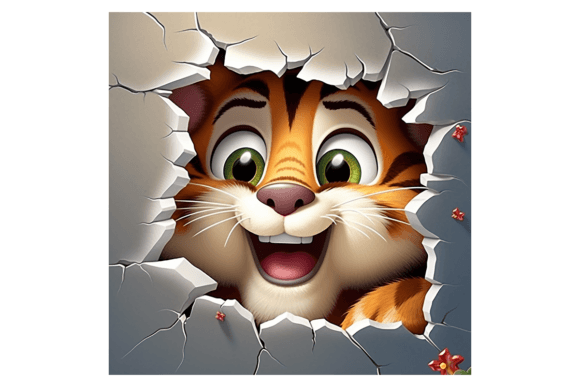
When I first pulled up the preview for Christmas Tiger Broken Wall 4, my immediate reaction was one of curiosity mixed with a designer's caution. As someone who spends hours digitizing and stitching for clients, I know that a striking visual on a screen does not always translate perfectly to thread. This piece falls under the Illustrations category, which usually implies a higher level of detail and artistic flair compared to standard clipart-style motifs. The concept of a tiger breaking through a wall with a holiday twist is bold, edgy, and definitely stands out in a sea of traditional snowmen and reindeer. But does it hold up under the needle?
First Impressions and Visual Personality
The mood of this design is energetic and slightly rebellious, which makes it a fantastic departure from the usual soft, cozy holiday aesthetics. The "broken wall" effect suggests depth and texture, relying heavily on how the digitizer handled the transition between the solid background and the emerging subject. In a machine embroidery design, these transitions are critical. If the stitch placement isn't precise, the illusion of a crumbling wall can look muddy rather than dynamic.
Visually, the layout feels centered and impactful, likely demanding a medium to large hoop size to breathe properly. The personality of the tiger—fierce yet festive—creates a unique narrative. It is not just a cute animal; it is a statement piece. For an Etsy seller or a boutique owner looking to differentiate their small shop product line, this kind of distinct visual identity is gold. It appeals to customers who want something modern and unexpected for their holiday embroidery projects.
Real-World Application: The Custom Sweatshirt Test
To truly evaluate this embroidery file, I imagined a specific real-life scenario: creating a limited run of custom hoodies for a streetwear brand launching a winter collection. The goal was to place Christmas Tiger Broken Wall 4 on the back of a heavyweight cotton fleece sweatshirt. This fabric choice is ideal because it provides enough stability to support the likely dense stitch areas required for the "rubble" and the tiger's fur.
In this context, the design shines. The contrast between the rugged texture of the broken wall and the smoother elements of the tiger would create a tactile experience for the wearer. When stitched out, the fill stitch areas would need to be dense enough to prevent the dark fabric from peeking through, while the outlines might utilize a satin stitch for crisp definition. If executed well, this becomes more than just decoration; it becomes the focal point of the garment, increasing the perceived value of the finished product.
However, I also considered its use on a tote bag design. Canvas is a sturdy medium, but the weave can sometimes interfere with fine details. If the "broken wall" relies on tiny, scattered stitches to simulate debris, those could get lost in a coarse canvas weave. For a tote, I would recommend testing a version with slightly simplified detailing to ensure clarity from a distance.
Navigating Fabric Challenges and Stitch Density
While the design is compelling, there are areas where a professional must proceed with caution. The complexity of an illustration-style design often comes with high stitch density. If you attempt to stitch Christmas Tiger Broken Wall 4 on thin or stretchy fabrics, such as a lightweight t-shirt or a baby onesie, you risk puckering and distortion. The tension from thousands of stitches can warp the fabric, ruining the straight lines of the "wall" and making the tiger look skewed.
For baby embroidery or delicate items, this design might be too heavy unless significantly scaled down, which could compromise the integrity of the small details. Similarly, placing this on a curved surface like a cap requires careful attention. The center of the design might sit flat, but the edges of the broken wall effect could bridge or pull if the cap frame isn't adjusted perfectly. In these cases, using a high-quality cut-away stabilizer is non-negotiable to maintain the shape of the embroidery project after washing.
Another consideration is the color palette. Holiday designs often rely on specific thread colors like reds, greens, and golds. If the original file uses subtle shading achieved through many color changes, it might increase production time for a craft business running high volumes. I always advise checking the color stop sequence. Sometimes, simplifying the thread count by merging similar shades can speed up production without sacrificing the overall look, especially for commercial embroidery orders.
Enhancing Brand Value and Customer Trust
Using a unique design like this directly impacts your brand consistency and customer trust. When a client receives a personalized gift or a piece of custom apparel featuring a high-quality, well-stitched illustration, it reinforces the perception of professionalism. Conversely, if the details are blurry or the stitching is messy due to poor fabric choice, it reflects poorly on the maker.
For digital product sellers, offering this as part of a bundle requires clear communication. If you are selling the digital embroidery file itself, provide ample printable mockup images showing the design on various backgrounds. Show potential buyers how it looks on dark versus light fabrics. This transparency helps creative entrepreneurs visualize the end result and reduces the likelihood of dissatisfaction.
Practical Notes for the Studio
Before committing to a full production run or listing this in your shop, here are my essential steps for vetting Christmas Tiger Broken Wall 4:
- Test on Scrap First: Always stitch a sample on the exact fabric you intend to use. Check for registration issues where colors meet.
- Check Contrast: Ensure the thread colors stand out against your chosen fabric. A dark tiger on a black hoodie might need a border or backing to pop.
- Review Density: Look at the back of the sample. If there is excessive buildup, consider adding underlay or adjusting tension.
- Verify Licensing: Since this is a creative asset, confirm the license terms. Can you sell finished goods? Are there restrictions on the number of items? This is crucial for Etsy sellers and commercial users.
- Inspect Small Details: Zoom in on the "broken" edges. Do they look intentional or jagged? Tiny imperfections here can ruin the illusion.
- Mockup in Black and White: Convert your preview to grayscale to check the value contrast. If the design loses its form in black and white, it may lack definition in thread.
Ultimately, Christmas Tiger Broken Wall 4 offers a fresh take on seasonal decor. It bridges the gap between traditional holiday themes and modern graphic art. For the discerning designer willing to pay attention to fabric selection and stabilization, this design has the potential to create stunning handmade products that resonate with customers looking for something different. Whether it ends up on a kitchen towel, a trendy embroidered patch, or a signature hoodie, its success lies in the execution. Treat it with the technical respect it demands, and it will undoubtedly elevate your portfolio.