Christmas Puck: Vintage Illustrations for Branding
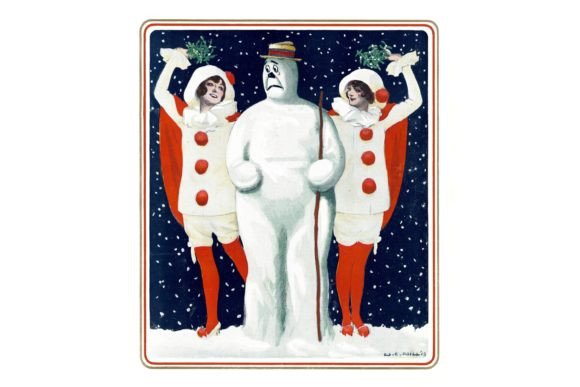
As a brand designer who has spent years helping local businesses find their visual voice, I approach every new graphic design asset with a critical eye. It is not just about whether an image looks pretty; it is about whether it can carry the weight of a brand identity, survive the printing process, and connect emotionally with customers. When I first encountered Christmas Puck by William Ely Hill, I immediately recognized its potential for small business branding. This piece is not merely a decoration; it is a storytelling device rooted in early 20th-century charm that can elevate a modern product line.
The first impression of this illustration is one of whimsical nostalgia. William Ely Hill was known for his ability to capture the spirit of the holidays with a touch of humor and warmth, and this specific asset embodies those qualities perfectly. For a local business owner, this mood suggests a brand personality that is friendly, approachable, and deeply human. It does not scream "corporate" or "mass-produced." Instead, it whispers of handmade care, tradition, and festive joy. This makes it an ideal candidate for businesses that want to position themselves as authentic and community-focused rather than cold and industrial.
Transforming Local Products with Vintage Charm
To understand the true value of Christmas Puck by William Ely Hill, let us imagine a real-world scenario. Picture a local bakery specializing in holiday cookies and artisanal breads. Their current packaging is functional but lacks soul. By integrating this illustration into their packaging design, they instantly create a narrative. The puck character could sit atop a cookie tin, acting as a mascot that invites customers to indulge in a treat from a bygone era. Similarly, a handmade soap business could use this asset on a hang tag attached to a winter-themed lavender bar, suggesting that the product is a perfect stocking stuffer with old-world quality.
The versatility of this illustration extends far beyond simple decoration. In the realm of logo design, elements of the puck could be isolated or stylized to create a unique mark for a seasonal pop-up shop or a limited-edition product line. For social media managers, this asset provides rich content for social media graphics. Imagine an Instagram story featuring the puck peeking out from behind a "Holiday Sale" text overlay, or a Facebook cover photo where the character interacts with the brand's latest offerings. These marketing visuals stop the scroll because they offer something distinct from the generic, flat vector art that saturates the digital landscape.
Furthermore, the asset serves as a powerful tool for product label creation. Whether it is a jar of homemade jam, a bottle of spiced cider, or a candle with a pine scent, placing this vintage image on the label creates immediate shelf appeal. It signals to the consumer that there is a story behind the product. In a crowded marketplace, this differentiation is crucial for small business branding. It helps a local product stand out against big-box competitors by leveraging the emotional connection people feel toward vintage aesthetics.
Strategic Placement for Maximum Impact
When evaluating where to place Christmas Puck by William Ely Hill, we must consider visual hierarchy. This asset works best as a hero graphic or a decorative accent that frames important information. On a menu for a cozy coffee shop, the illustration could serve as a border element or a divider between sections, adding a festive touch without obscuring the prices or descriptions. For thank-you cards included in online orders, the puck can be the central focus, accompanied by a handwritten-style note, reinforcing the personal touch of a handmade business.
In terms of product mockup presentations, this illustration shines when used on textured backgrounds. Imagine the image printed on kraft paper, embossed on a matte box, or foil-stamped on a dark green label. These applications enhance the perceived value of the product. For boutique owners, using this asset on shopping bags or tissue paper turns the unboxing experience into a memorable event. It transforms a simple transaction into a brand experience that customers are likely to share online, effectively turning your packaging into free advertising.
However, a professional designer knows that not every asset fits every context. There are situations where Christmas Puck by William Ely Hill should be used with caution. For formal corporate branding or industries requiring a sleek, ultra-modern aesthetic, this vintage style might clash with the desired message. Additionally, one must be careful not to overcrowd the design. If a product label already contains extensive legal information, ingredient lists, or barcodes, adding a complex illustration can create visual noise. In these cases, the asset should be scaled down or used on secondary packaging rather than the primary label.
Designer Notes for Commercial Success
Before committing to this asset for a client project, there are several practical steps to take. First, always verify the commercial license. While vintage works often fall into the public domain, ensuring you have the right to use them for commercial design and physical product sales is non-negotiable. Next, test the image in black and white. Many local businesses print on single-color stock to save costs; the illustration must retain its clarity and impact without color.
Typography pairing is another critical consideration. Christmas Puck by William Ely Hill pairs beautifully with serif fonts that echo the early 1900s, such as Caslon or Garamond. It also works well with playful script fonts that mimic handwriting, enhancing the handmade feel. However, avoid pairing it with overly geometric sans-serif fonts unless you are intentionally aiming for a high-contrast, eclectic look. Always preview the asset on small labels to ensure details do not disappear when scaled down. Finally, compare your design with competitor packaging. If every local bakery is using similar vintage clips, consider how you can manipulate the color or composition of this asset to maintain uniqueness.
Ultimately, Christmas Puck by William Ely Hill is more than just a file on a hard drive; it is a bridge between the past and the present. For local business owners and creative entrepreneurs, it offers a way to infuse their brand identity with warmth and character. Whether used for web design banners, editorial layouts in a holiday catalog, or as a printable design for gift tags, this asset has the power to strengthen customer trust and polish marketing visuals. By treating it with the strategic care it deserves, designers can help small businesses tell stories that resonate long after the holiday season ends.